Overview
Bukhara, one of the oldest continuously inhabited cities in Central Asia, boasts over 2,500 years of history. Often called a "Living Museum," this remarkable city preserves more than 140 architectural monuments that transport visitors back through centuries of Islamic civilization. In 1993, UNESCO designated the historic center of Bukhara as a World Heritage Site, recognizing its outstanding universal value as one of the most complete examples of a medieval Central Asian city.
For centuries, Bukhara served as a major center of Islamic scholarship, theology, and culture, earning the title "Bukhoro-i-Sharif" (Noble Bukhara). Scholars, poets, and scientists from across the Islamic world gathered here to study and teach, making it one of the great intellectual capitals alongside Baghdad and Cairo. As a crucial trading hub on the Silk Road, Bukhara connected East and West, facilitating not only commerce but also the exchange of ideas, technologies, and artistic traditions. Today, walking through its narrow streets and visiting its magnificent madrasas, mosques, and caravanserais offers an unparalleled journey through time.
The city's historic center remains remarkably intact, with its traditional neighborhoods, covered bazaars, and grand religious complexes creating an atmosphere unlike anywhere else in the world. Unlike Samarkand, where many monuments have been extensively restored, Bukhara retains a more authentic, weathered appearance that speaks to its genuine antiquity and continuous habitation over millennia.
Top Attractions
- Ark Fortress - The ancient citadel that served as the residence of Bukhara's rulers for over a millennium, standing as a massive earthen fortress with walls rising up to 20 meters high
- Kalyan Minaret and Mosque - The iconic 47-meter-tall minaret from 1127, so impressive that even Genghis Khan ordered it spared during his destructive conquest, accompanied by the grand Kalyan Mosque
- Lyabi-Hauz Ensemble - A picturesque pond plaza surrounded by ancient madrasas and the Nadir Divan-Begi Khanaka, serving as the heart of old Bukhara and a popular evening gathering spot for locals and visitors
- Chor-Minor - A unique four-minaret gatehouse from 1807, tucked away in a residential neighborhood, representing Bukhara's architectural eccentricity with its distinctive turquoise domes
- Ismail Samani Mausoleum - The oldest surviving monument in Central Asia, dating from the 10th century, renowned for its sophisticated brickwork that creates intricate geometric patterns
- Trading Domes - Historic covered bazaars including Taq-i Zargaron (Jewelers' Dome), Taq-i Telpak Furushon (Hat-Makers' Dome), and Taq-i Sarrafon (Moneychangers' Dome), where merchants have traded for centuries and artisans still sell traditional crafts
Getting There
From Tashkent, travelers can reach Bukhara via the comfortable Afrosiyob high-speed train, which takes approximately 4 hours through the desert landscape, or by domestic flight, which takes about 1 hour. Train tickets should be booked in advance, especially during peak tourist season. From Samarkand, the journey is shorter and more accessible, with regular trains taking about 1.5 hours and shared taxis offering a faster alternative at around 2-3 hours. Many travelers combine visits to both cities in a single trip along the historic Silk Road route.
Getting Around
The historic old city of Bukhara is compact and best explored on foot, allowing visitors to discover hidden courtyards, traditional neighborhoods, and unexpected architectural treasures around every corner. Most major monuments lie within a 15-20 minute walk of each other. For visiting attractions in the outer areas, such as the Bahauddin Naqshband Complex or Sitorai Mohi-Hosa Palace, taxis are readily available and inexpensive. The Yandex Go app works well in Bukhara for calling taxis, though many drivers do not speak English. Bicycles can also be rented from some guesthouses for exploring the city at a leisurely pace.
Best Time to Visit
The ideal times to visit Bukhara are during spring (April-May) and autumn (September-October), when temperatures are moderate and pleasant for extended walking and sightseeing. Summer months, particularly July and August, see extreme heat with temperatures frequently exceeding 40°C (104°F), making midday exploration challenging. However, early mornings and evenings remain enjoyable even in summer. Winter is mild compared to northern climates, with daytime temperatures around 10-15°C (50-59°F), though evenings can be chilly. Winter visitors will find fewer crowds and a more authentic local atmosphere, though some guesthouses may have limited heating.
Recommended Duration
Most travelers find that 2-3 days provides sufficient time to explore Bukhara's main attractions without feeling rushed. This allows for thorough visits to the major monuments, time to wander the atmospheric old town, explore the covered bazaars, and enjoy the city's distinctive evening ambiance around Lyabi-Hauz. Bukhara is frequently combined with Samarkand in a week-long itinerary covering the highlights of Uzbekistan's Silk Road heritage. Those with particular interest in Islamic architecture or Silk Road history may wish to extend their stay to 4-5 days to visit peripheral sites and lesser-known monuments.
What to Eat
Bukhara has developed its own distinctive culinary traditions over centuries. Bukharan plov differs from other regional variations by incorporating chickpeas and raisins alongside the traditional rice, meat, and carrots, creating a unique sweet-savory flavor profile. Oshi sofiy, a festive version of plov traditionally served at weddings and celebrations, showcases the city's culinary sophistication. Naryn, a cold noodle dish with horse meat or beef, offers a refreshing option during hot summers. The city's teahouse culture centers around green tea, served throughout the day in charming chaikhanas (teahouses). Don't miss the local halva, a sweet confection made with flour, sugar, and nuts that comes in numerous varieties. The covered bazaars sell excellent dried fruits, nuts, and spices that make perfect souvenirs and ingredients for recreating Bukharan flavors at home.
Shopping
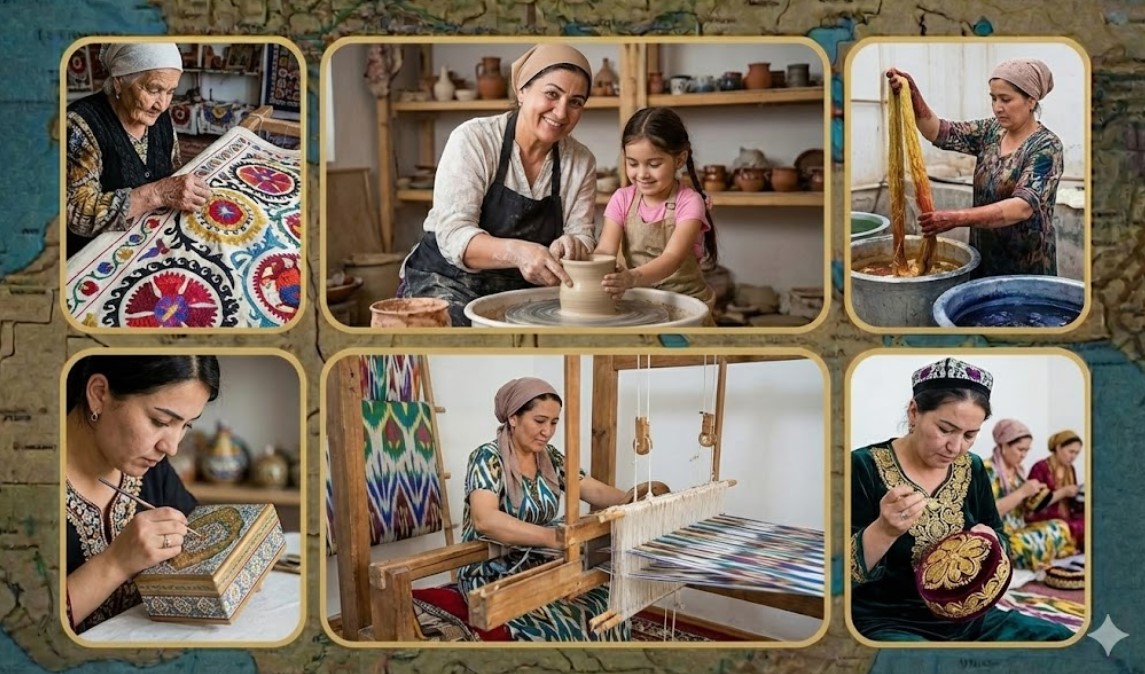
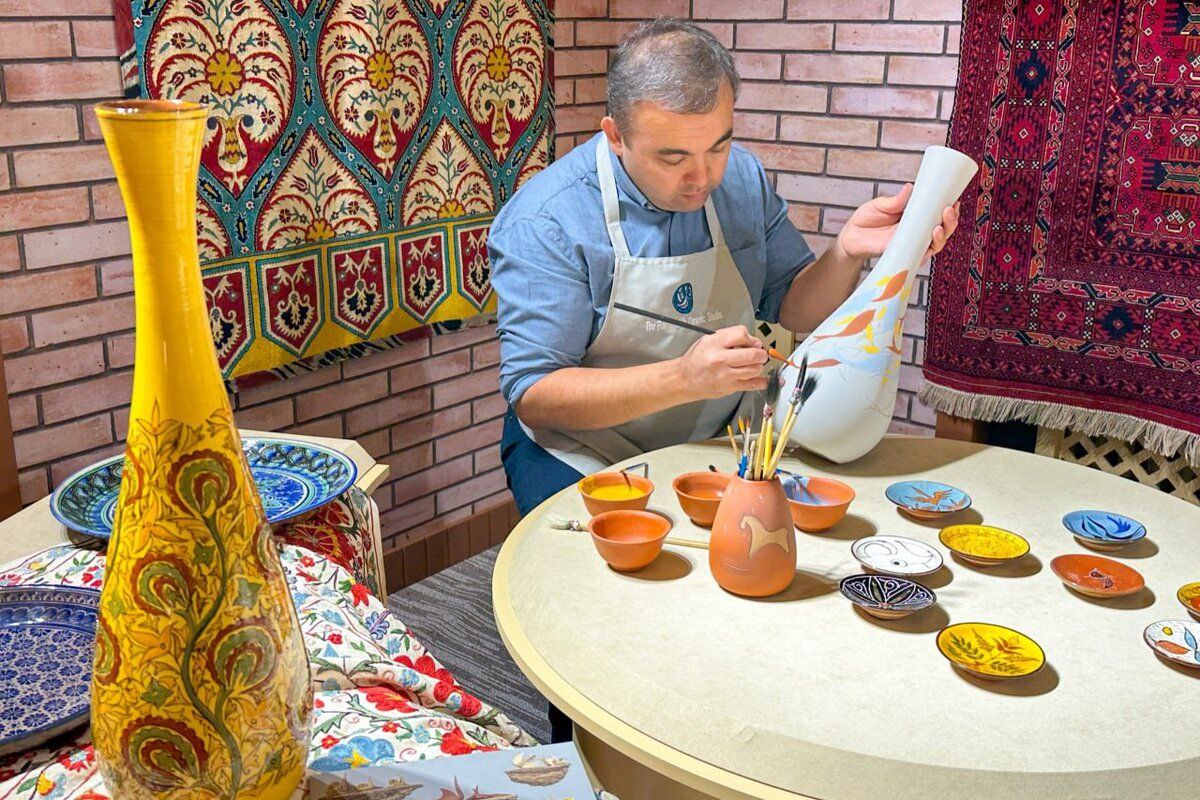
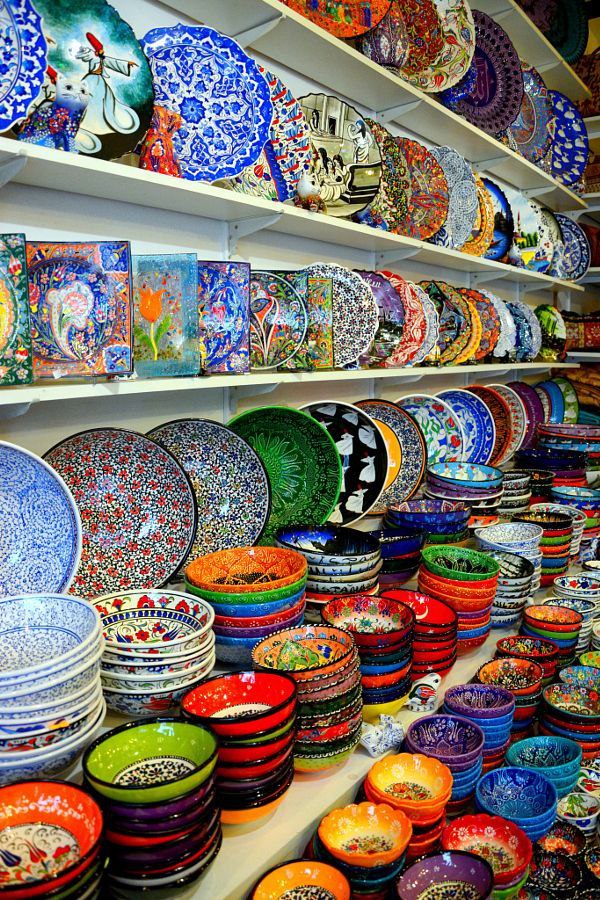
Bukhara offers exceptional shopping opportunities for traditional crafts and artisan goods. The city is renowned for its silk carpets, meticulously hand-woven with traditional patterns that have been passed down through generations. Gold embroidery, known as zarduzi, adorns everything from clothing to wall hangings and represents one of Bukhara's most prestigious craft traditions. Miniature paintings on camel bone, paper, or silk depict scenes from Persian poetry and Silk Road history. Suzani textiles feature elaborate embroidered patterns in vibrant colors, perfect as wall decorations or bedspreads. The covered bazaars beneath the trading domes offer a labyrinth of stalls selling spices, dried fruits, traditional knives, ceramics, and jewelry. For a unique souvenir, visit nearby Gijduvan to purchase handmade scissors, a craft that has been perfected in this small town for centuries and remains highly prized throughout Central Asia.