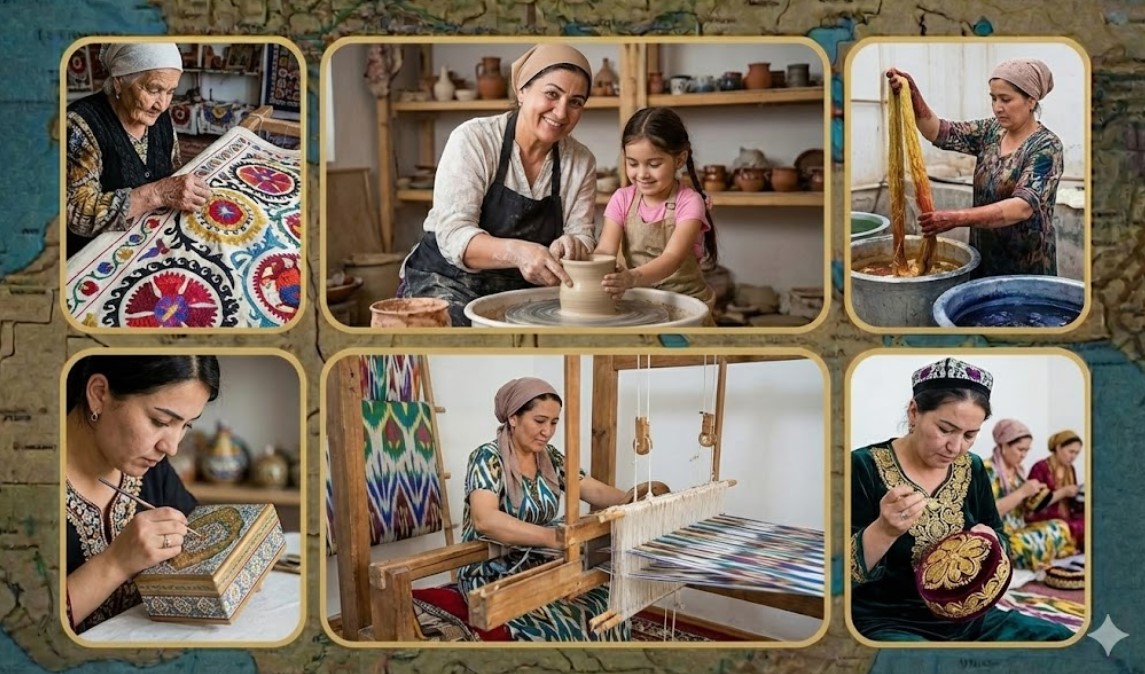
15 days / 14 nights
Tashkent
Timur's Homeland
Shahrisabz, the "Green City," is the birthplace of Amir Timur (Tamerlane), the legendary 14th-century conqueror whose empire stretched from Delhi to Damascus. Located about 90 kilometers south of Samarkand, this historic town sits in a fertile valley beyond the scenic Takhta Karacha Pass. Despite its profound historical significance, Shahrisabz remains refreshingly less touristy than its famous neighbors, offering visitors an authentic glimpse into Uzbekistan's rich Timurid heritage.
The city's UNESCO World Heritage designation recognizes its remarkable collection of medieval monuments, particularly the ruins of Timur's grand summer palace and several important religious complexes. While many travelers overlook Shahrisabz in favor of the Silk Road's more famous cities, those who make the journey are rewarded with stunning architecture, a relaxed atmosphere, and insight into the origins of one of history's most ambitious rulers. The town's name, meaning "green city" in Persian, reflects the lush orchards and gardens that have flourished here for centuries.
Walking through Shahrisabz today, you can still sense the ambition of Timur, who intended his birthplace to rival even Samarkand in grandeur. Though earthquakes and time have taken their toll on many structures, the remaining monuments still inspire awe and provide a fascinating counterpoint to the more restored sites elsewhere in Uzbekistan.
Shahrisabz is most commonly visited as a day trip from Samarkand, approximately 90 kilometers to the north. The journey takes about 1.5 hours by car, crossing the scenic Takhta Karacha Pass with spectacular mountain views. Shared taxis depart regularly from Samarkand's Registan area and offer an affordable option for independent travelers. Private taxis can also be arranged through hotels or tour operators for more flexibility. There is no direct train service to Shahrisabz, so road transport is the only practical option. Some organized tours combine Shahrisabz with stops at Kitab Gorge or other sites along the route.
Shahrisabz has a compact town center, and the main historical sites are within comfortable walking distance of each other. The walk from the Ak-Saray Palace to the Dorut Tilavat Complex takes only about 10 minutes. Local taxis are plentiful and very affordable for traveling between more distant sites or if you prefer not to walk in the heat. Many drivers wait near the main monuments and can be hired for short trips or a full circuit of the city's attractions. The relaxed pace and manageable distances make Shahrisabz an easy city to explore independently without the need for a guide, though local guides are available at major sites if desired.
The ideal times to visit Shahrisabz are during spring (April-May) and autumn (September-October). Spring brings blooming orchards and gardens that justify the city's "green" name, with pleasant temperatures perfect for exploring outdoor sites. Autumn offers comfortable weather, clear skies, and the harvest season's abundant fresh produce. Summer (June-August) can be extremely hot, with temperatures regularly exceeding 40°C (104°F), making midday sightseeing uncomfortable. Winter (November-March) is cooler and quieter, though some mountain passes may be affected by snow. Shahrisabz sits at a higher elevation than Samarkand, so it tends to be a few degrees cooler year-round, providing welcome relief from the heat of the lower-lying cities.
Most visitors allocate a half day to full day for Shahrisabz, typically as a day trip from Samarkand. The main historical sites can be thoroughly explored in 3-4 hours, allowing time for lunch and leisurely photography. Those particularly interested in Timurid history or who want to experience the town's unhurried atmosphere might consider staying overnight, though accommodation options are more limited than in major cities. A full-day excursion from Samarkand, departing in the morning and returning in the late afternoon, provides ample time to see all major attractions without feeling rushed. This duration also allows for lunch at a traditional restaurant and perhaps some browsing in local markets.
Shahrisabz is famous throughout Uzbekistan for its tandir kabob, a specialty where an entire lamb is slow-cooked in a traditional clay oven (tandir) until incredibly tender. This dish is considered one of the finest versions of kabob in the country and should not be missed. The local plov (pilaf) also has its own regional variation, often featuring locally raised lamb and rice from nearby farms. Fresh bread baked in tandirs throughout the day has an exceptional flavor, particularly when served warm. The surrounding agricultural region provides garden-fresh vegetables, fruits, and herbs that feature prominently in local cuisine. Small family-run restaurants near the main monuments serve authentic home-style cooking at very reasonable prices.
Unlike the more commercialized bazaars of Samarkand and Bukhara, Shahrisabz offers a more authentic, low-key shopping experience focused on local rather than tourist-oriented goods. The town is known for its high-quality embroidered skullcaps (doppi), which are worn daily by locals and make excellent souvenirs. Local craftspeople produce traditional textiles, though in smaller quantities than the major cities. The surrounding region produces excellent honey, particularly from mountain wildflowers, sold in local markets at very reasonable prices. Small workshops near the main monuments sell handicrafts, though with far less tourist hustle than you'll encounter elsewhere. The general bazaar, while modest, provides insight into daily life and offers seasonal fruits, nuts, and spices. Shopping in Shahrisabz feels more like discovering local treasures than navigating tourist markets.
Explore our curated tours that include this destination
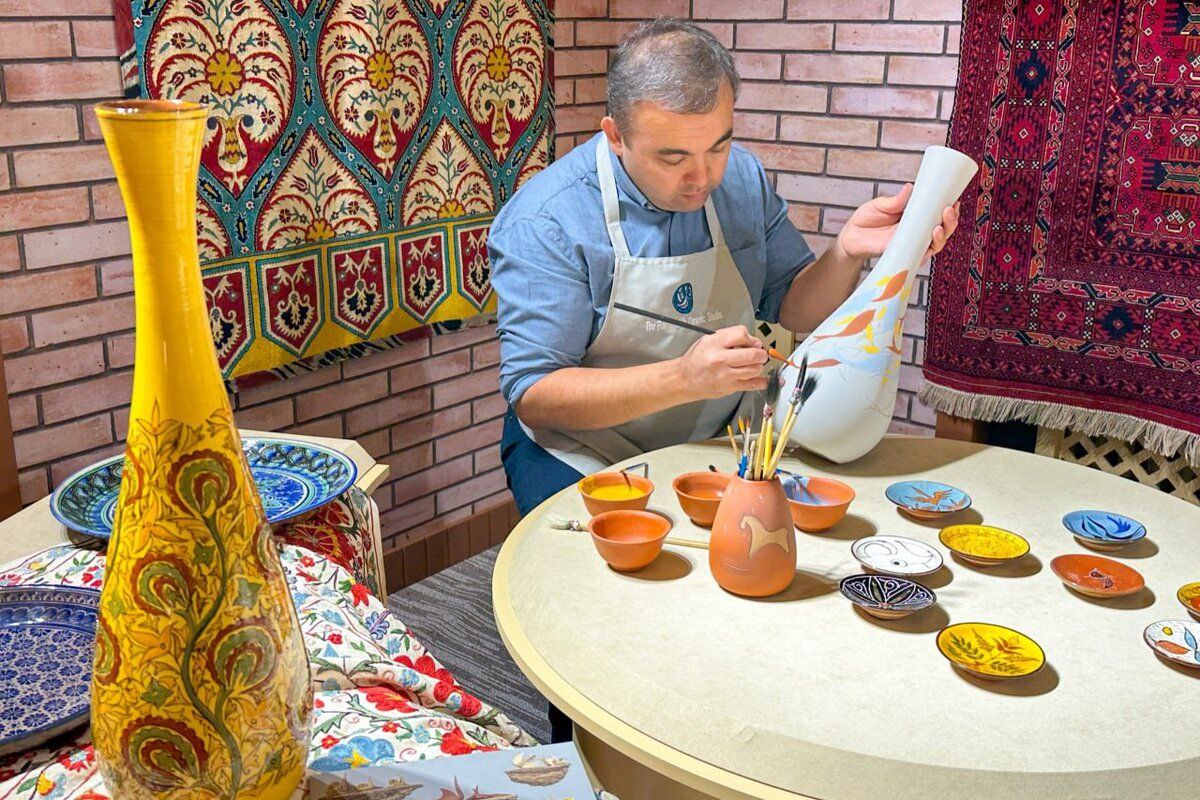
A 3-day introduction to Uzbek pottery traditions in Samarkand. Perfect weekend escape: lea...
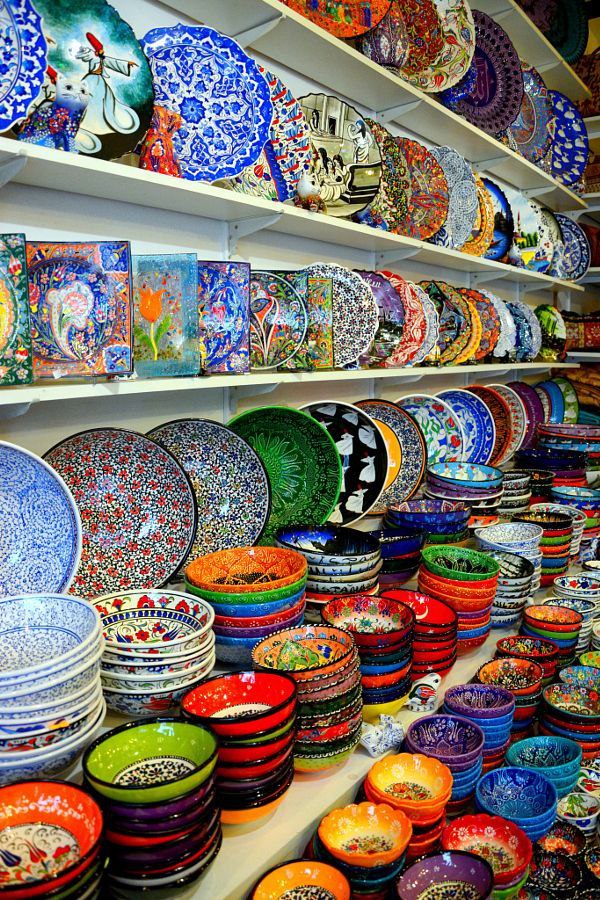
A 6-day deep dive into Uzbekistan's pottery and embroidery traditions. Learn from 6th-gene...

The definitive 8-day Silk Road tour covering Tashkent, Samarkand, Bukhara, and Khiva with...

A 7-day nature-focused tour exploring Uzbekistan's mountains, deserts, and lakes — from Ch...

A private two-day escape from Bukhara into the Nuratau Mountains for desert drives, mounta...