Silk to Canvas: Fergana Valley to Karakalpakstan Grand Journey
Overview
From master weavers to forgotten masters - A 15-day craft immersion through Uzbekistan's living traditions and hidden art treasures. 10 hands-on workshops, culminating at the legendary Savitsky Museum.
Journey Through Living Crafts
This 15-day journey traces Uzbekistan’s most important craft traditions — from the silk workshops of Margilan to the Savitsky Museum in Nukus, often called the “Louvre of the Desert” for its remarkable collection of Soviet-era avant-garde art.
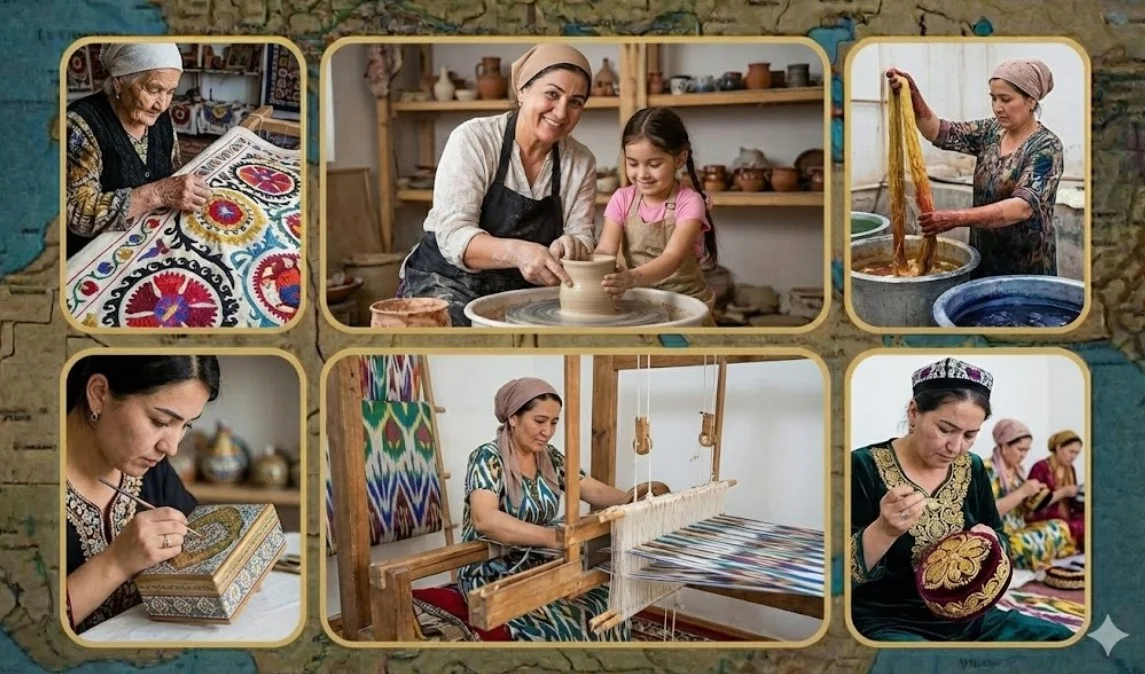
Traveling across the Fergana Valley, historic oasis cities, and the Karakalpak steppe, you’ll encounter master artisans in their working environments and gain rare insight into how centuries-old techniques are preserved today. Through guided visits, demonstrations, and conversations, this journey reveals the stories, materials, and cultural meaning behind Uzbekistan’s living crafts.
The experience culminates in Nukus, where one of the world’s most unexpected and important art collections offers a powerful conclusion to a journey shaped by creativity, resilience, and cultural continuity.
Why This Journey Is Different
Rather than rushing between highlights, this itinerary is carefully paced to allow meaningful time in each craft center. Visits to workshops and studios are thoughtfully arranged so you can see full processes unfold, understand regional differences, and engage directly with artisans and workshop owners.
Throughout the journey, historical context and contemporary life are woven together — from UNESCO-listed city centers to quiet workshop courtyards — offering a deeper understanding of how craft traditions have survived social change and modernization.
The final days in Nukus provide a striking contrast, where art once hidden from public view now stands as one of Central Asia’s most significant cultural legacies.
Craft Traditions Along the Route
You will explore a wide range of artistic traditions, including:
Silk production and dyeing traditions in Margilan
Ikat pattern preparation and weaving at the Yodgorlik Factory
Traditional loom weaving demonstrations
Rishtan and Gijduvan ceramic schools
Natural glazing techniques using ishkor
Suzani embroidery traditions in Bukhara
Carpet weaving methods and symbolism
Knife-making traditions in Chust
Karakalpak applied arts and museum collections
Each encounter is guided and contextualized, with time for discussion, observation, and photography.
Cultural Highlights
Registan Square at sunset (Samarkand)
Gur-e-Amir Mausoleum, resting place of Amir Timur
Bukhara Old City (UNESCO World Heritage Site)
Khiva’s Itchan Kala fortress
Savitsky Museum, Nukus (over 90,000 artworks)
The Ikat Experience
At the UNESCO-recognized Yodgorlik Silk Factory in Margilan, you’ll follow the complete ikat process — from the preparation of silk threads to natural dyeing and weaving on historic wooden looms. Master artisans demonstrate the abr (cloud) tie-resist technique and explain the symbolism and complexity behind each pattern.
This visit offers a rare opportunity to understand why ikat remains one of Central Asia’s most valued and technically demanding textiles.
The Savitsky Collection
Founded by Igor Savitsky, the museum in Nukus houses one of the world’s most important collections of Russian and Central Asian avant-garde art. Many works were preserved here to escape Soviet censorship, making the collection both artistically and historically significant.
A curator-led visit provides insight into the people, politics, and perseverance behind the collection, and explains why Nukus has become an essential destination for art lovers and collectors worldwide.
Accommodation
Throughout the journey, accommodation is arranged in hand-picked boutique and family-owned hotels, selected for their character, comfort, and location. These properties reflect local style and hospitality while offering a consistent level of quality across all regions.
Small Group Experience
With a maximum of 8 travelers, the journey remains personal and flexible. Smaller group size allows for unrushed visits, meaningful interaction, and the freedom to spend time where interest naturally develops — whether in a workshop, a museum gallery, or a historic neighborhood.
Highlights
- Culminates at Savitsky Museum - "Louvre of the Desert" with 90,000 artworks
- All major Uzbek crafts: silk, pottery, embroidery, carpet, knife-making
- Best season: April-June & September-October
- From Fergana Valley to Karakalpakstan - full Uzbekistan experience
- Small groups (max 10 travelers) for quality artisan time
What's Included & Excluded
Included
- All 10 craft workshops with master artisans (32+ hours)
- Private transportation throughout (air-conditioned van)
- English-speaking craft guide (entire journey)
- Museum entrance fees (Savitsky, Registan, palaces)
- Airport transfers (arrival & departure)
- All workshop fees (70% goes directly to artisans)
- 14 nights accommodation (homestays + boutique hotels)
- 6 lunches 3 dinners
Not Included
- International flights to/from Tashkent
- Travel insurance (required)
- Visa fees (if applicable)
- Alcoholic beverages
- Personal shopping and souvenirs
- Tips for guides and drivers (suggested $100-150 total)
- Optional activities not listed in itinerary
Cancellation Policy
Free cancellation up to 30 days before the tour start time. You can cancel up to 30 days in advance of the experience for a full refund.
Day-by-Day Itinerary
-
Day 1
Arrive Tashkent. Transfer to Fergana Valley (5 hours by car or 1-hour flight). Evening walking tour of Kokand—visit Khudoyar Khan Palace. Orientation dinner with your small group. -
Day 2
Margilan Silk Factory & Ikat Workshop
Morning: Visit legendary Yodgorlik Silk Factory—watch silk being spun from cocoons on 100-year-old machines. Afternoon: Hands-on ikat dyeing workshop. Learn how threads are tie-dyed BEFORE weaving to create blurred patterns. Homestay with silk weaver family. -
Day 3
Rishtan Pottery Masterclass
Drive to Rishtan (1.5 hours). Full day with master potter Alisher Nazirov family. Morning: Pottery wheel session—shape bowls and plates. Afternoon: Learn the famous Rishtan turquoise glaze technique. Evening: Traditional ceramics family dinner. Homestay. -
Day 4
Carpet Weaving in Fergana → Samarkand
Morning: Carpet weaving workshop—try knotting techniques on a loom. Afternoon: Drive to Samarkand (6 hours through mountains). Evening: Registan Square at sunset—see where your journey crafts originated. Boutique hotel. -
Day 5
Samarkand Paper-Making & Miniature Painting
Morning: Konigil village paper-making workshop—see how mulberry bark becomes silk-smooth paper. Make your own sheets. Afternoon: Miniature painting intro session—learn brush techniques. Evening: Registan by night (photo opportunity). Homestay. -
Day 6
Gijduvan Pottery Immersion Day 1
Drive to Gijduvan (1 hour). Full day with UNESCO master potter. Morning: Advanced wheel techniques, shaping large pieces. Afternoon: Decorating pottery with traditional patterns. Evening: Potter family dinner with stories of 6 generations. Homestay. -
Day 7
Gijduvan Pottery Day 2 → Bukhara
Morning: Glazing your pottery pieces. Learn the iconic Gijduvan blue technique. Afternoon: Transfer to Bukhara (1 hour). Old City walking tour—explore artisan quarters. Boutique hotel. -
Day 8
Bukhara Embroidery & Metalwork
Morning: Suzani embroidery workshop—learn chain stitch and satin stitch. Begin your own suzani panel. Afternoon: Blacksmith workshop—watch knife-making, try basic metalwork. Evening: Bukhara Old City at dusk. Homestay with embroidery family. -
Day 9
Bukhara Continued Embroidery & Free Time
Morning: Continue your suzani panel—add colors and patterns. Master shares family designs passed down 5 generations. Afternoon: Free time to explore Bukhara bazaars, visit Ark Fortress, or shop for crafts. Evening: Rooftop dinner. Homestay. -
Day 10
Khiva Old Town & Wood Carving
Early morning flight to Urgench, transfer to Khiva (30 min). Morning: Khiva Old Town tour (UNESCO site)—see wood carving masters at work. Afternoon: Wood carving workshop—try chiseling walnut wood for doors and pillars. Boutique hotel in Old Town. -
Day 11
Nukus → Savitsky Museum Finale
Morning: Drive to Nukus through Kyzylkum Desert (4 hours). Afternoon: 3-hour private curator tour of Savitsky Museum—see 90,000 artworks, including Soviet avant-garde banned pieces. This is the culmination of your craft journey. Hotel in Nukus. -
Day 12
Nukus → Tashkent Departure
Morning: Flight back to Tashkent. Afternoon: Pick up your fired pottery pieces (or arrange shipping). Farewell lunch. Depart with your handmade ikat scarf, ceramic bowl, suzani panel, miniature painting, and craft journal.
Meeting Point & Pickup
Hotel Pickup Included
Free pickup from any hotel within Tashkent city center (5 km radius). Please provide your hotel name when booking.
Know Before You Go
-
Moderate walking required: This tour involves approximately 3km of walking. Wear comfortable walking shoes.
-
Dress code: Shoulders and knees should be covered when entering religious sites. Women may want to bring a scarf to cover shoulders. Lightweight, breathable clothing recommended.
-
Cash for purchases: Bring Uzbek som (UZS) for tips, souvenirs, and snacks. ATMs available near Registan Square. Credit cards are not widely accepted at small vendors.
-
Photography: Photography is allowed at all sites. Flash photography may be restricted inside certain buildings. Always ask permission before photographing people.
-
Weather considerations: Samarkand summers are hot (35-40°C/95-104°F). Bring sun protection, hat, and water. Spring and autumn are most comfortable (15-25°C/59-77°F).
-
Accessibility: This tour is not wheelchair accessible due to uneven historic surfaces and stairs. Contact us if you have specific mobility concerns and we'll suggest alternatives.
Frequently Asked Questions
What should I bring?
Comfortable walking shoes, sun protection (hat, sunscreen, sunglasses), camera, water bottle, and local currency (Uzbek som) for tips and souvenirs. We also recommend bringing a scarf for women to cover shoulders when entering religious sites.
What is not allowed on this tour?
Smoking inside historical monuments, touching ancient artifacts or walls, flash photography inside certain buildings (external photography is always allowed), and climbing on ancient structures. Please be respectful of these UNESCO World Heritage sites.
Is the tour suitable for children?
Yes, this tour is family-friendly and suitable for children aged 6 and above. The walking pace is moderate, and we can adjust the tour content to keep younger visitors engaged. Children under 12 receive a 50% discount.
What happens if it rains?
The tour operates in most weather conditions. Samarkand has relatively little rain, but if heavy rain is forecasted, we'll contact you to reschedule or offer a full refund. Light rain doesn't typically affect the tour as many sites have covered areas.